
West Point Celebrates Reopening of Historic Cullum Hall Following Comprehensive Restoration and Renovation
News
The United States Military Academy at West Point recently marked a significant milestone with the ribbon-cutting of Cullum Hall, a landmark building that has served the Academy community for more than a century. As a longtime design partner to West Point, EwingCole led the design of the $39 million restoration and modernization effort through the Jacobs-EwingCole Joint Venture, working in close collaboration with the U.S. Army Corps of Engineers (USACE) and the contractor, Kokolakis Contracting.
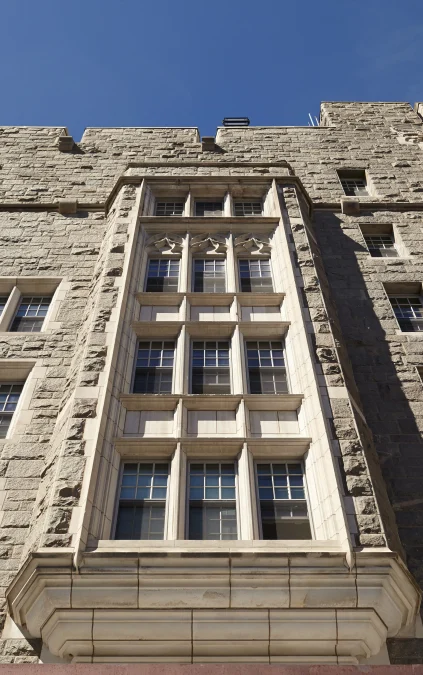
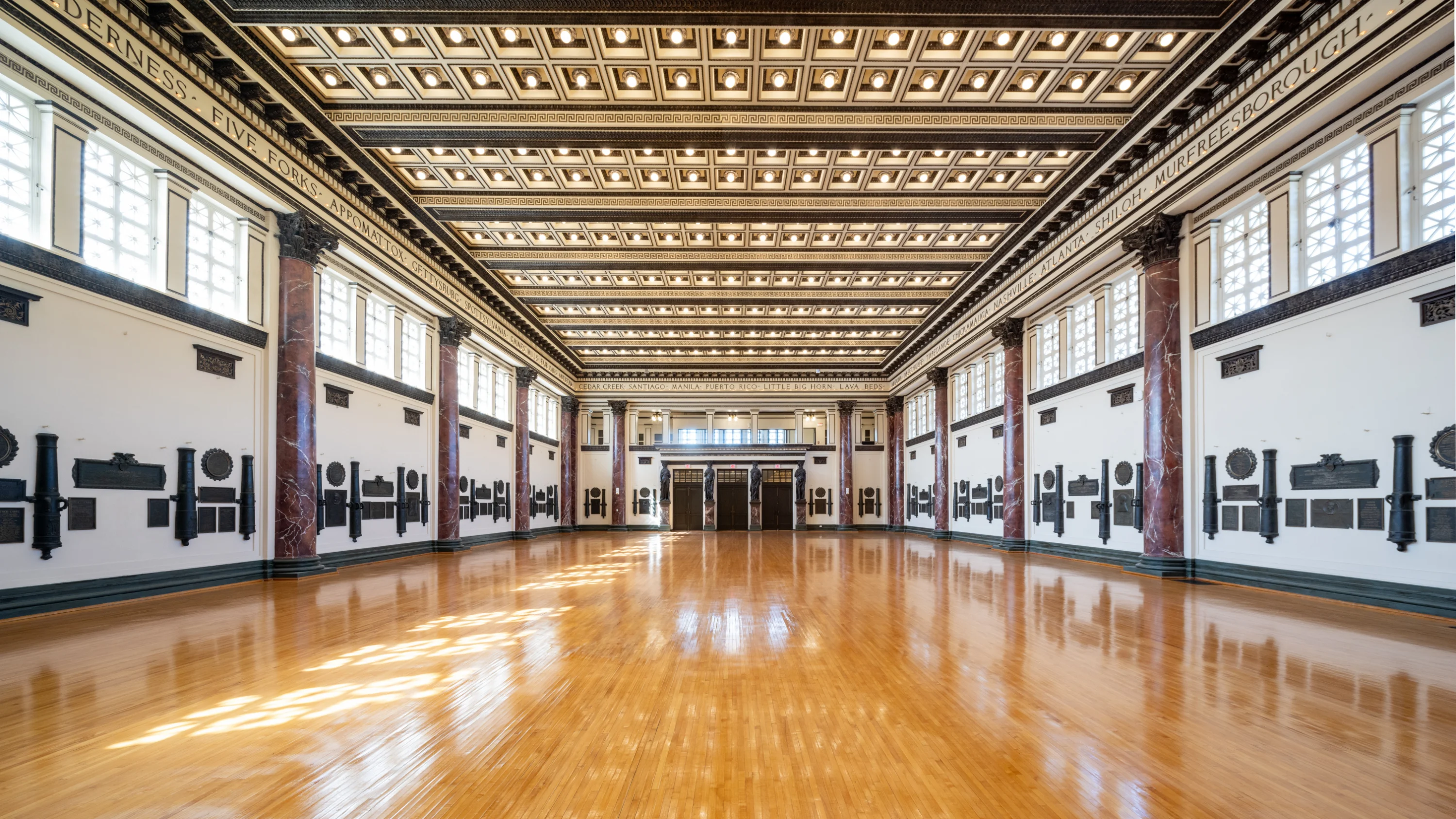
Originally designed by McKim, Mead & White and completed in 1900, Cullum Hall is listed on the National Register of Historic Places and designated a “Monumental” building by the Department of Defense. The 44,225-square-foot facility serves as a ceremonial and social centerpiece of the Academy, housing the Ballroom, Memorial Room, Grand Hall, library archives, and offices supporting cadet development and military protocol.
“Having worked with West Point for many years, we understand the importance these buildings hold for the Academy and its graduates,” said Principal, Director of Government Projects Barbara Kolonauski, AIA, LEED AP. “That familiarity allowed us to approach Cullum Hall with both technical expertise and a deep appreciation for its history, helping deliver a project that preserves what makes the building special while improving how it serves the institution today.”

The renovation transformed the building’s lower levels into a state-of-the-art archival repository capable of housing more than 11,000 linear feet of historical records, manuscripts, photographs, maps, and special collections documenting the history of West Point and its graduates. New archival spaces incorporate specialized environmental controls, enhanced security, cold storage, processing areas, and collaborative workspaces designed to preserve and support access to the Academy’s extensive collections.
Throughout the project, EwingCole carefully integrated modern building systems while preserving the architectural character that defines Cullum Hall. In the historic Ballroom, flexible fire-suppression piping and strategically routed mechanical systems were designed to protect the space without compromising its ornate coffered ceilings, decorative finishes, and historic fabric. Original lighting fixtures were meticulously restored, ensuring the buildings historic character remains intact while meeting contemporary performance standards. Argus Architect & Preservation, P.C., serving as the historic preservation specialist, led the exterior restoration work, including cleaning and repointing the granite façade and repairing historic cast-iron and stone elements. Inside the building, Jablonski Building Conservation, Inc., as the architectural conservationist, oversaw the restoration of the original paint, plaster, and decorative finishes.


The project also introduced significant infrastructure and accessibility improvements, including new mechanical, electrical, plumbing, fire protection, telecommunications, and HVAC systems; a new elevator; upgraded entrances and walkways; and a restored terracotta roof that reflects the building’s original design intent. These enhancements ensure that Cullum Hall will continue serving cadets, alumni, faculty, and visitors for generations to come.
The reopening of Cullum Hall represents another chapter in EwingCole’s longstanding partnership with the United States Army Corps of Engineers and the United States Military Academy, where the firm has contributed to the preservation, modernization, and growth of one of the nation’s most respected military institutions. By thoughtfully blending historic stewardship with contemporary performance, the project reinforces West Point’s commitment to honoring its past while preparing for the future.