
Rather Than Replace, Refine: Celebrating Preservation Month
Insights
Capturing the potential of older structures, both historic and commercial, is a win-win for communities, institutions, and developers. Each May, preservation advocates, from local groups to statewide historical societies, as well as business and civic organizations, mark Preservation Month by highlighting historic places, encouraging heritage tourism, and showcasing the social and economic value of preserving the past. For us, that includes adaptive reuse, because a building’s character and history play a valuable role in shaping its future, even if it serves an entirely new purpose. Whether transforming a century-old mill into a next-generation research and development lab or repurposing an industrial warehouse into a modern healthcare facility, the range of revitalization opportunities is extensive.
Equally important is the role of historic preservation in maintaining the cultural and architectural identity of our built environment. Preserving historic structures safeguards the stories embedded in their materials, craftsmanship, and form, while reinforcing a sense of place within the community. When paired with adaptive reuse, preservation allows these buildings to remain active contributors to contemporary life rather than static artifacts, extending their relevance for future generations.
Adaptive reuse is also a key strategy for land conservation and reducing urban sprawl. One of its primary environmental benefits is the retention of a building’s embodied carbon—the energy consumed and emissions generated through material extraction, manufacturing, and construction. By reusing existing structures, projects avoid the carbon-intensive processes associated with demolition and new construction, making them inherently more sustainable.
Advances in technology and material science, along with cleaner approaches to manufacturing and research, continue to expand the range of program types viable for reuse. These innovations allow historic or underutilized buildings to meet modern performance standards while maintaining their original character.
Evaluation and assessment of existing structures are critical first steps. Our integrated architectural and engineering expertise enables knowledge-based analysis of structural systems, façade conditions, and building performance, supporting informed decision-making from the outset.
A deep understanding of planning and success criteria across industries such as healthcare, research, and manufacturing yields valuable insights early in the process, helping owners and developers align design strategies with operational goals.
To celebrate Preservation Month and highlight the importance of both historic preservation and adaptive reuse, here are examples of EwingCole’s work that demonstrate how thoughtful intervention can extend the life of existing buildings while supporting sustainability, performance, and community impact.

Woodbine Lane Ambulatory Care Center
Geisinger Health System
Danville, PA
Geisinger Health System’s adaptive reuse of a former 204,000-square-foot industrial warehouse demonstrates how existing building stock can be transformed to support modern healthcare delivery. By repurposing the abandoned structure near its Danville, PA campus, the project leveraged existing site infrastructure and access, reducing both construction costs and the environmental impact associated with new development.
The first phase introduces a 74,000-square-foot ambulatory surgery center within the existing shell, with operating rooms, endoscopy, PACU, and pre- and post-op spaces organized to support efficient patient flow. Future phases will expand services with a sports medicine and radiology center, extending the life and utility of the original structure.
The design takes advantage of the warehouse’s inherent flexibility, adapting its open floor plate to support both vertical and horizontal integration of care. “Behind the curtain” circulation allows patients to move seamlessly between procedures and diagnostic services without disrupting clinical workflows.
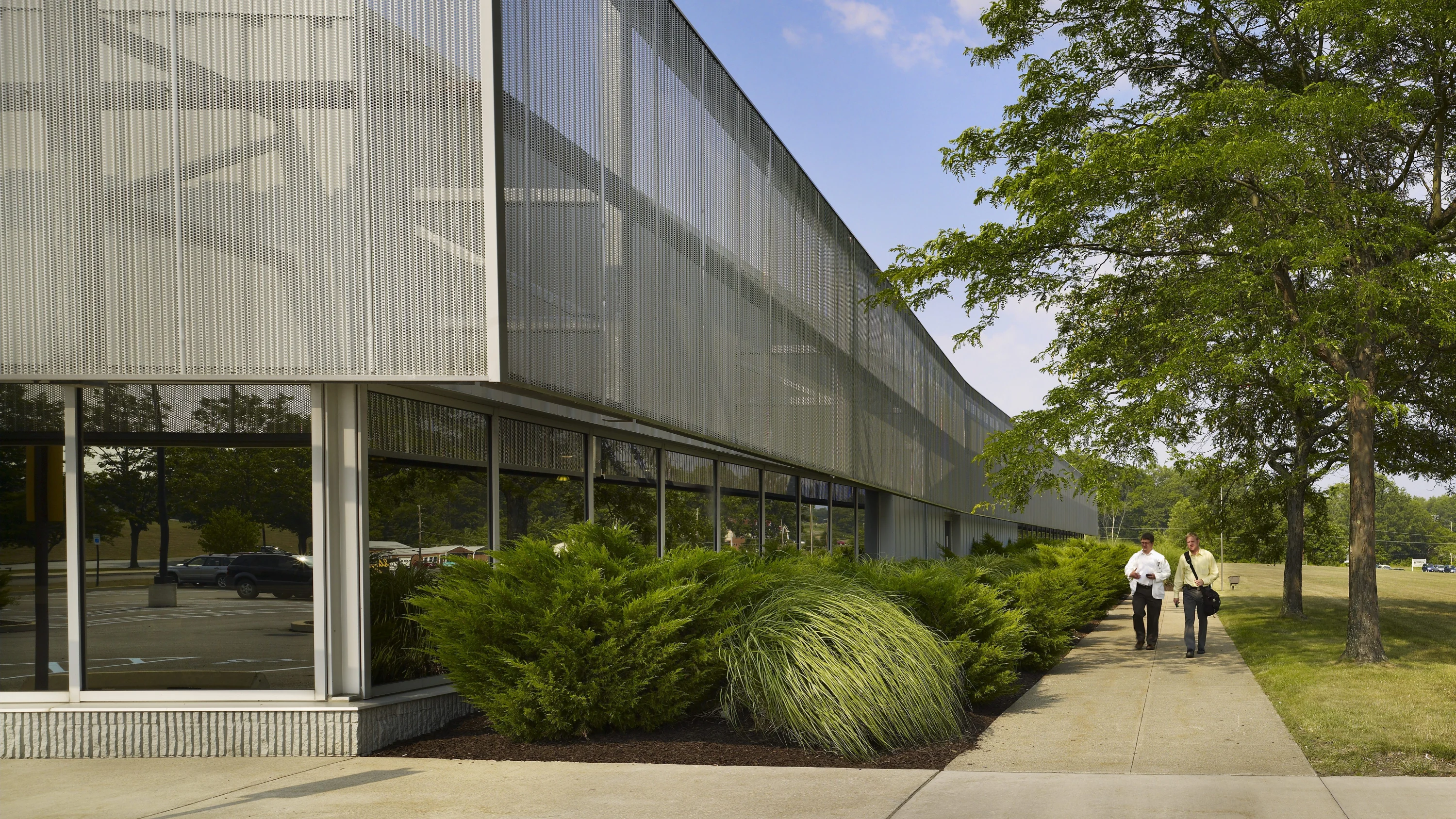
On the exterior, targeted interventions redefine the building’s identity. New curtain walls and perforated metal screens transform key façades, creating a contemporary healthcare environment while working within the constraints of the existing industrial form.


Burk-Bergman Boathouse
University of Pennsylvania
Philadelphia, PA
The renovation of the Burk-Bergman Boathouse treats preservation as both an architectural and cultural responsibility, maintaining the identity of one of Philadelphia’s most recognizable landmarks. The design preserves the historic riverfront façade, with exterior elements restored or reconstructed using archival research to reflect the building’s earliest known appearance while accommodating contemporary use.
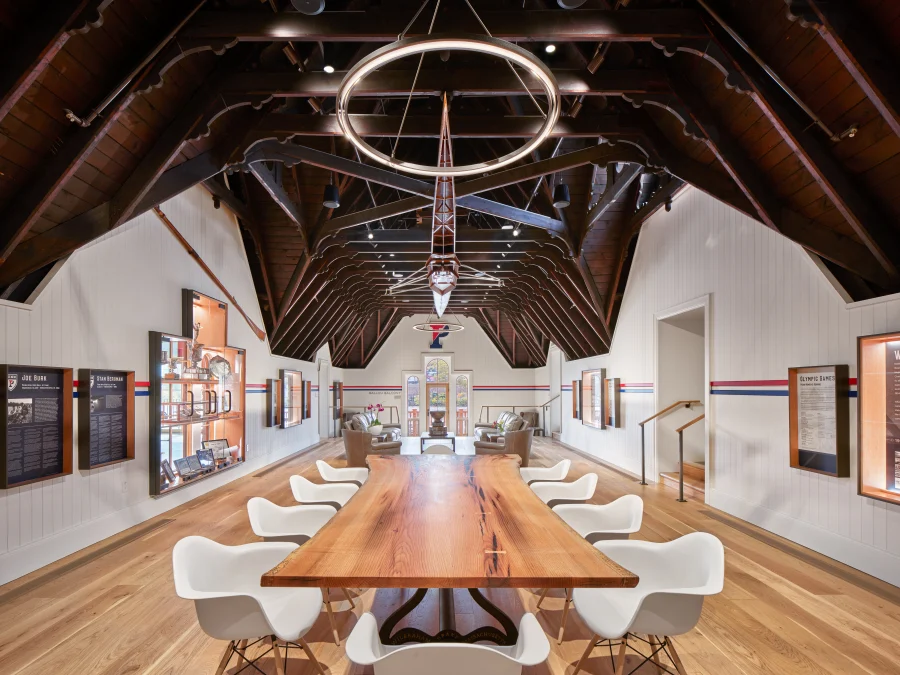
Inside, original materials and structure are retained and expressed, including exposed trusses and masonry. New interventions are intentionally distinct, creating a clear dialogue between historic fabric and modern additions. Repurposed elements reinforce the building’s history, allowing the space to function as both a facility and a record of its evolution.
Resiliency and longevity were central to the approach. The project introduces flood-resistant materials and upgraded building systems to address the challenges of its riverfront setting, while new foundations improve stability in poor soil conditions. Targeted structural enhancements stabilize the building and support long-term use. Areas of deterioration were carefully reconstructed to match historic conditions, while new structural systems were integrated to meet current performance needs without compromising the character of the original design.


Organ Manufacturing Group (OMG) R&D Office
United Therapeutics
Manchester, NH
The most significant decarbonization strategy for United Therapeutics’ Organ Manufacturing Group facility was the adaptive reuse of the Seal Tanning Building, a four-story masonry-and-heavy-timber mill structure originally built in 1897. By repurposing the existing building rather than constructing a new laboratory, the project avoided the substantial embodied carbon associated with demolition and new construction.

The design retains the building’s structural frame, masonry envelope, and floor systems, supported by extensive analysis and testing. Wood samples were evaluated to determine material properties, allowing engineers to reinforce only where necessary. This targeted approach preserved the majority of the historic structure while minimizing the need for replacement.
Through strategic space planning and structural modifications, the team prioritized engineered wood products to further reduce embodied carbon, using steel only where required and limiting other carbon-intensive materials, such as concrete.

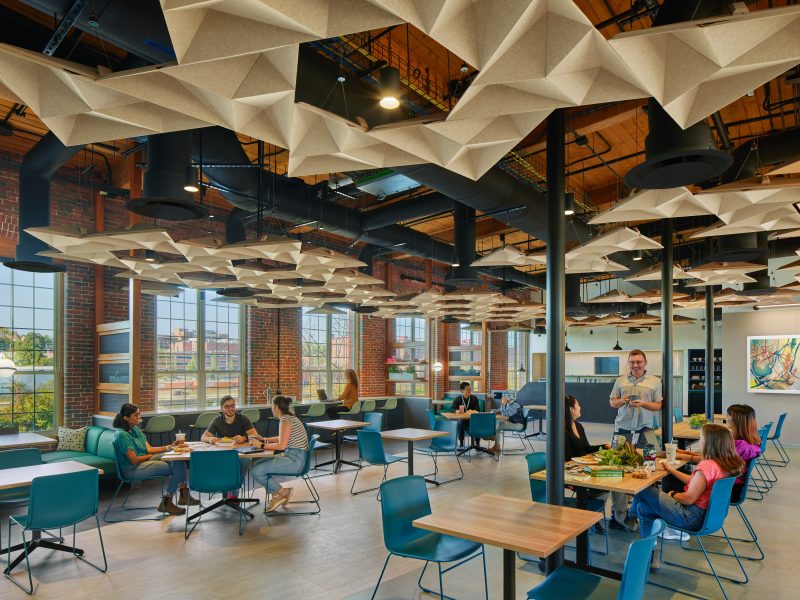
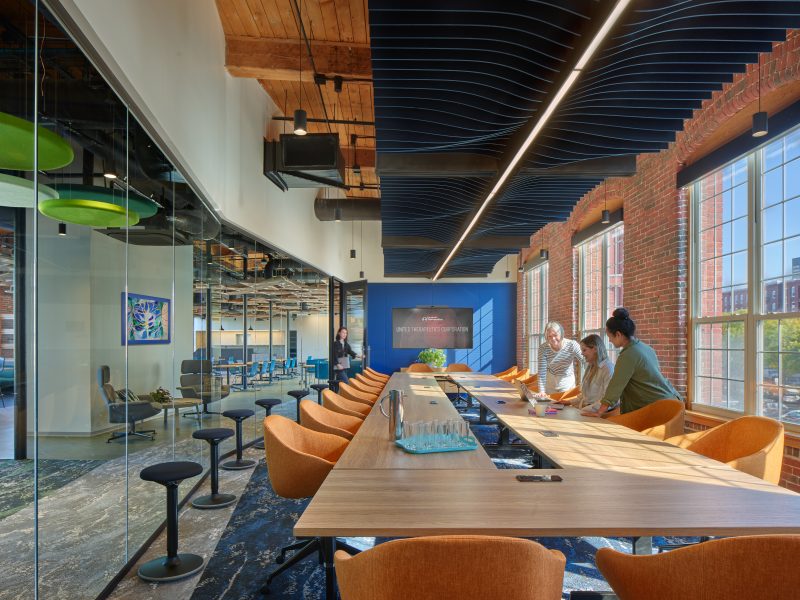
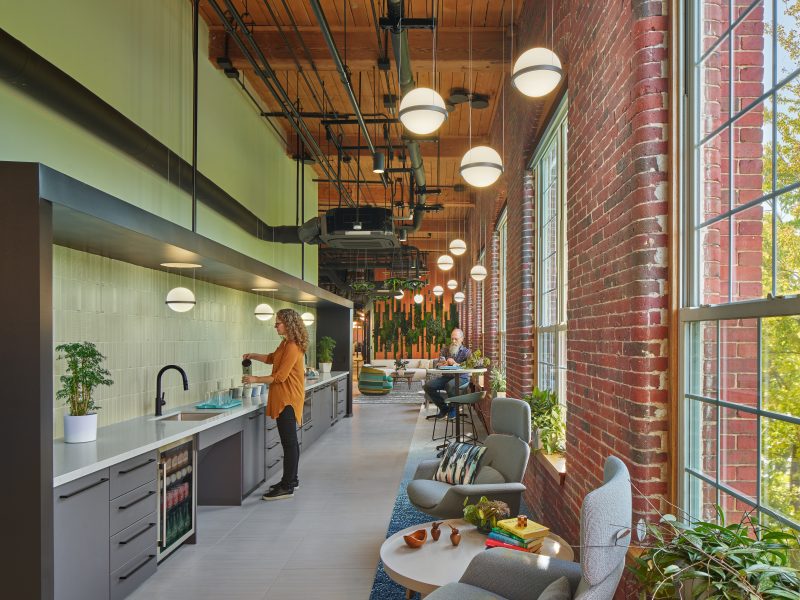
Beyond its environmental impact, the project preserves a key piece of Manchester’s industrial heritage within the Amoskeag Millyard Historic District. Vacant for years following a 1998 fire and a failed redevelopment effort, the building is now restored as a modern research facility, supporting United Therapeutics’ mission while contributing to the revitalization of the surrounding community.
Ambulatory Care Center
Confidential Client
East Meadow, NY
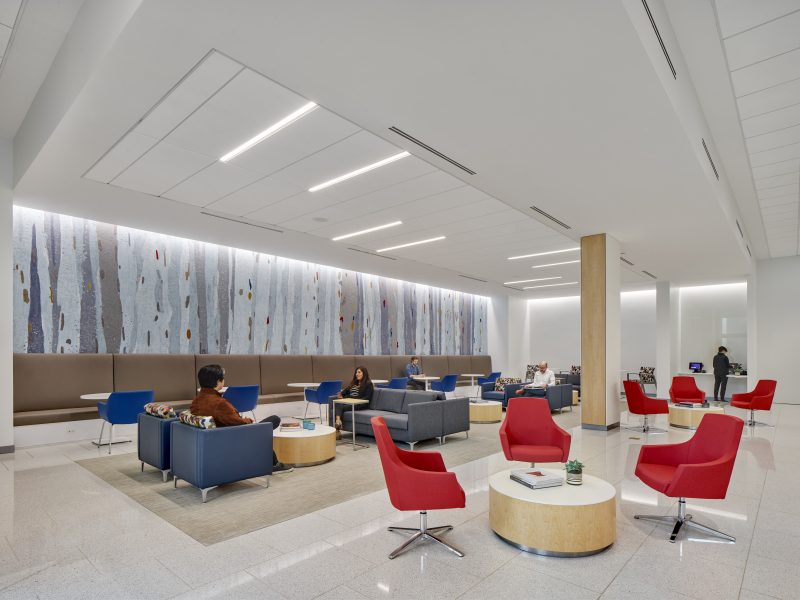
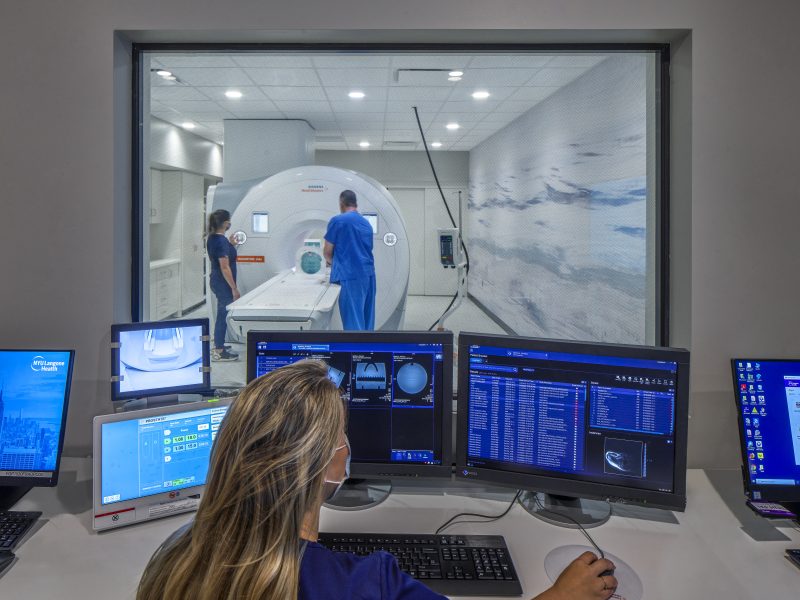
The Ambulatory Care Center in East Meadow demonstrates how adaptive reuse can expand access to care by transforming underutilized retail space into a high-performing healthcare environment. A former 50,000-square-foot supermarket was repurposed into a multispecialty outpatient facility, avoiding new construction while leveraging the existing building shell and infrastructure.

The design capitalizes on the building’s open floor plate, converting a flexible retail layout into a coordinated clinical environment that brings more than 30 specialty practices under one roof. This approach improves care delivery and operational efficiency while maximizing the inherent adaptability of the existing structure.
Rather than working against the building’s origins, the design uses its spatial qualities to enhance the patient experience. Generous ceiling heights and access to natural light are preserved and amplified, helping to transform a utilitarian commercial space into a welcoming, patient-centered setting.
Through targeted intervention rather than wholesale reconstruction, the project demonstrates how adaptive reuse can extend the life of existing buildings while meeting contemporary healthcare demands—delivering a modern facility that supports both community access and long-term sustainability.



Smithsonian’s David H. Koch Hall of Fossils
Smithsonian Institution
Washington D.C.
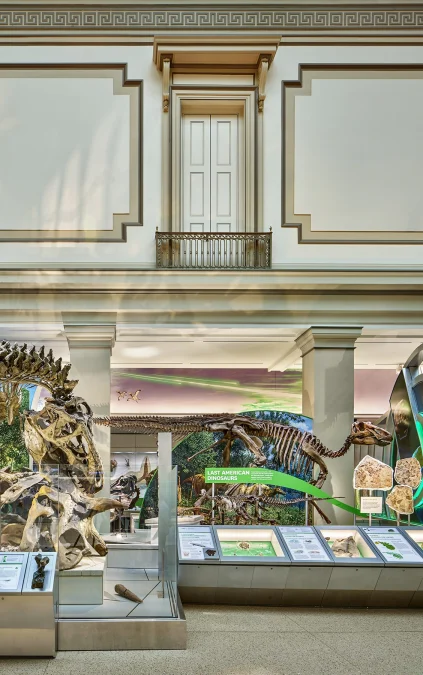
The renovation of the Smithsonian’s David H. Koch Hall of Fossils demonstrates how historic preservation can extend the life and relevance of one of the world’s most visited museum spaces. Rather than replace the gallery, the project restored its original 1910 Beaux-Arts character, reversing decades of alterations that had obscured key architectural features and diminished the spatial experience.

At the same time, the project integrates modern infrastructure and environmental controls to support long-term performance. Advanced glazing systems filter UV light and reduce heat gain, while new HVAC and lighting systems significantly improve energy efficiency and climate stability, both critical for artifact preservation and operational sustainability.
By aligning restoration with contemporary museum standards, the project ensures the hall remains viable for decades to come. The renewed space supports evolving exhibit strategies, enhances visitor engagement, and protects irreplaceable collections, demonstrating how thoughtful preservation can sustain both the architectural legacy and institutional mission of a cultural landmark.