
WARP10 Structural Design of a cGMP Manufacturing Facility Using Mass Timber
Press
Published June 2, 2026, by Structure Magazine.
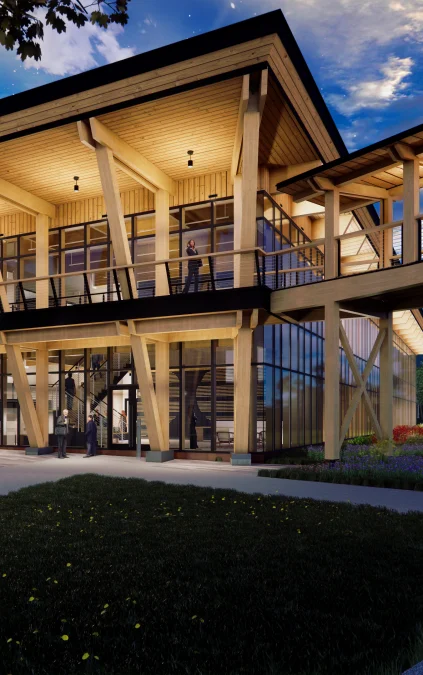
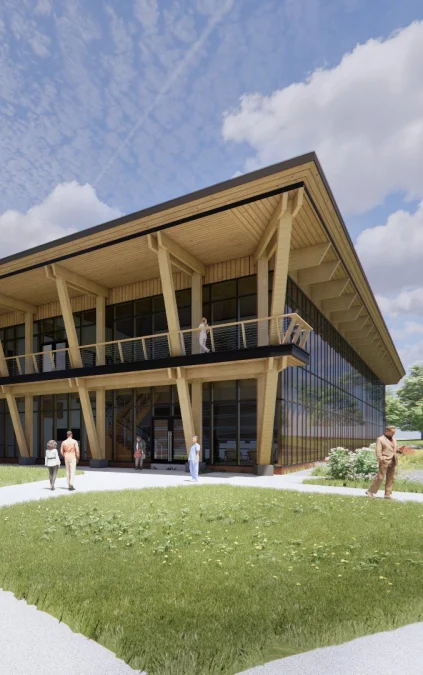
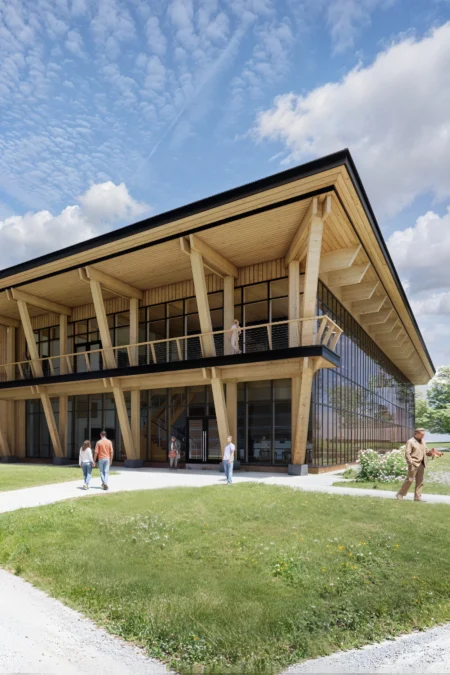
In Star Trek, Warp 10 represents the theoretical speed limit of the universe. United Therapeutics (UT) adopted the name for its newest North Carolina project, WARP10, signaling an ambition to push the boundaries of sustainable design and construction. While the facility does not bend space and time, it aims to achieve something unprecedented in the life sciences sector: to realize a Current Good Manufacturing Practices (cGMP) pharmaceutical manufacturing plant built largely from mass timber and designed to approach zero carbon.
The project is defined by four primary objectives: maximize manufacturing throughput, meet cost targets, deliver an operational facility by 2027, and achieve both net zero operational carbon and net zero embodied carbon. The 196,000-square-foot facility includes manufacturing, warehousing, laboratory, office, and central utility plant.
From the outset, UT prioritized sustainable material selection. The resulting hybrid structure combines mass timber with steel framing, incorporating green steel, low-carbon concrete, organic cladding materials, and rooftop photovoltaic systems. Traditional cleanroom systems and finishes are used within the manufacturing environments to meet stringent operational requirements.
Site and Context
The 12-acre site within Research Triangle Park is surrounded by mature trees and pedestrian walkways. The building responds directly to this setting, expressing UT’s sustainability ethos through the use of mass timber framing, timber curtain walls, and Shou Sugi Ban charred Accoya wood siding.
Code Considerations
The project was designed under the 2018 North Carolina Building Code which references ASCE 7-10 Minimum Design Loads for Buildings and Other Structures. This version of the International Building Code (IBC) provides very limited guidance for mass timber. Although wind controls the building’s lateral design, seismic requirements required special attention because ASCE 7-10 does not list mass timber frames as recognized seismic force resisting systems. Selecting an appropriate R (response modification) value therefore required careful evaluation. The 2018 North Carolina code also references the 2015 National Design Specification (NDS). However, the 2018 NDS, which was the latest code available at the time of design, was used to take advantage of its more current and comprehensive provisions for mass timber. The provisions from the 2021 IBC for special inspections were utilized for the mass timber construction.
Foundations and Substructure
Site preparation required demolition of an existing building and parking lot. Subsurface conditions included residual soils and shallow weathered rock, with approximately 50 feet of slope across the site. Blasting was required on the eastern edge, with fill placed on the western portion (Fig. 1).
A ground improvement system using rammed aggregate piers increased allowable soil bearing pressure to 6,000 psf, reducing the volume of concrete required and supporting the project’s carbon reduction goals. Rock anchors were introduced to provide uplift resistance at steel-braced frame locations.
Concrete mix designs were optimized to minimize embodied carbon, incorporating Type 1L cement, fly ash, slag, and CarbonCure technology, which injects CO2 during production to reduce overall carbon footprint.

To read the full story, visit Structure Magazine.