
Structural Engineering and Bringing New Life to Museums
Insights
You haven’t been to your favorite museum in years, and you’ve been following a recent renovation project in the news and on social media that is set to reshape the experience entirely. It’s an older institution that hasn’t changed much over the years and you decide today is the day to check it out. You gather your things and head downtown. You get in line, scan your ticket, and as you enter the main gallery, you look up and stop dead in your tracks. Above, massive jaws with thick rows of hand-sized teeth belonging to a 52’ prehistoric shark, a megalodon, bear down over throngs of excited visitors. This life-size, 2,000-lb model appears to float in suspended animation above the hall, as it would have when it ruled the oceans 3.6 million years ago. As you crane your neck, you ask yourself, “How on Earth did they get that up there?”
Moments like this are no small feat. The ability to suspend a two-thousand-pound exhibit above a public gallery represents years of planning, risk assessment, and decision-making that extends well beyond exhibit design. Long before visitors arrive, stakeholders must weigh the extent to which ambitious programming aligns with the realities of aging buildings, historic constraints, and long-term operational responsibilities.
Structural engineering is often where these decisions take shape. It determines how existing floors can support future exhibitions, how much flexibility a building offers as collections evolve, and where hidden risks could affect schedules, budgets, or safety. In renovation projects, these early engineering evaluations help institutions avoid costly surprises, protect irreplaceable collections, and ensure that today’s investments remain viable for decades to come.
By grounding design aspirations with a solid understanding of existing structures, museum leaders gain the confidence to pursue bold new ideas, knowing that with some clever engineering, their buildings can be evaluated and strengthened to support them. But long before any of that can happen, an important kind of investigative work begins behind the scenes.

What are We Working With?
The foundation of any major renovation is a thorough understanding of the existing building structure. Our structural engineers begin by evaluating current conditions and reviewing available historical drawings. It is critical to identify the building’s lateral wind and seismic force–resisting system; are there floors that must support heavier or specialized loads; are there signs of distress caused by settlement, corrosion, or decay; have there been any previous modifications or renovations; or is the original construction an obsolete historic structural system? These early assessments enable the entire design team to work confidently within the constraints of existing materials, legacy framing systems, and, at times, long-forgotten construction methods.

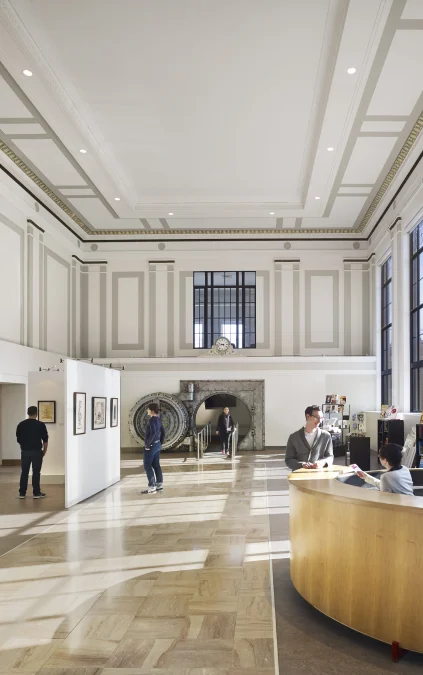
Susquehanna Art Museum renovation and expansion in Harrisburg, Pennsylvania.
Expanded Footprint: Unlocking New Space Within Existing Walls
Growth does not always come in the form of a new building, but through rethinking how existing space is used. Adding mezzanines, partial floors, or reconfigured galleries can unlock new opportunities for exhibitions, education, and public engagement without expanding a facility’s physical footprint.
Early evaluation of the existing structure allows project teams to understand where new occupiable space can be introduced, how loads from collections and visitors will be supported, and what level of flexibility the building can accommodate over time. These assessments inform key decisions around programming, circulation, and long-term operational planning.
This is where an efficient, well-oiled, multidisciplinary team comes in handy. Our structural engineers work together with architects and exhibit designers to evaluate existing structural capacity, connection points, overall floor and building performance. Introducing updated materials and strengthening techniques can often enable new ideas for spaces that align with both current needs and future aspirations. This helps museums plan for evolving exhibition strategies, traveling shows, and changing audience demands, while minimizing the risk of costly redesigns later in the process.
Some institutions choose to pursue more significant interventions by expanding their building footprint. Integrating modern additions with centuries-old structures can introduce additional complexity, but when addressed early, challenges often become opportunities.
A Heavy Lift: The Process for Structuring Large-Scale Museum Exhibits
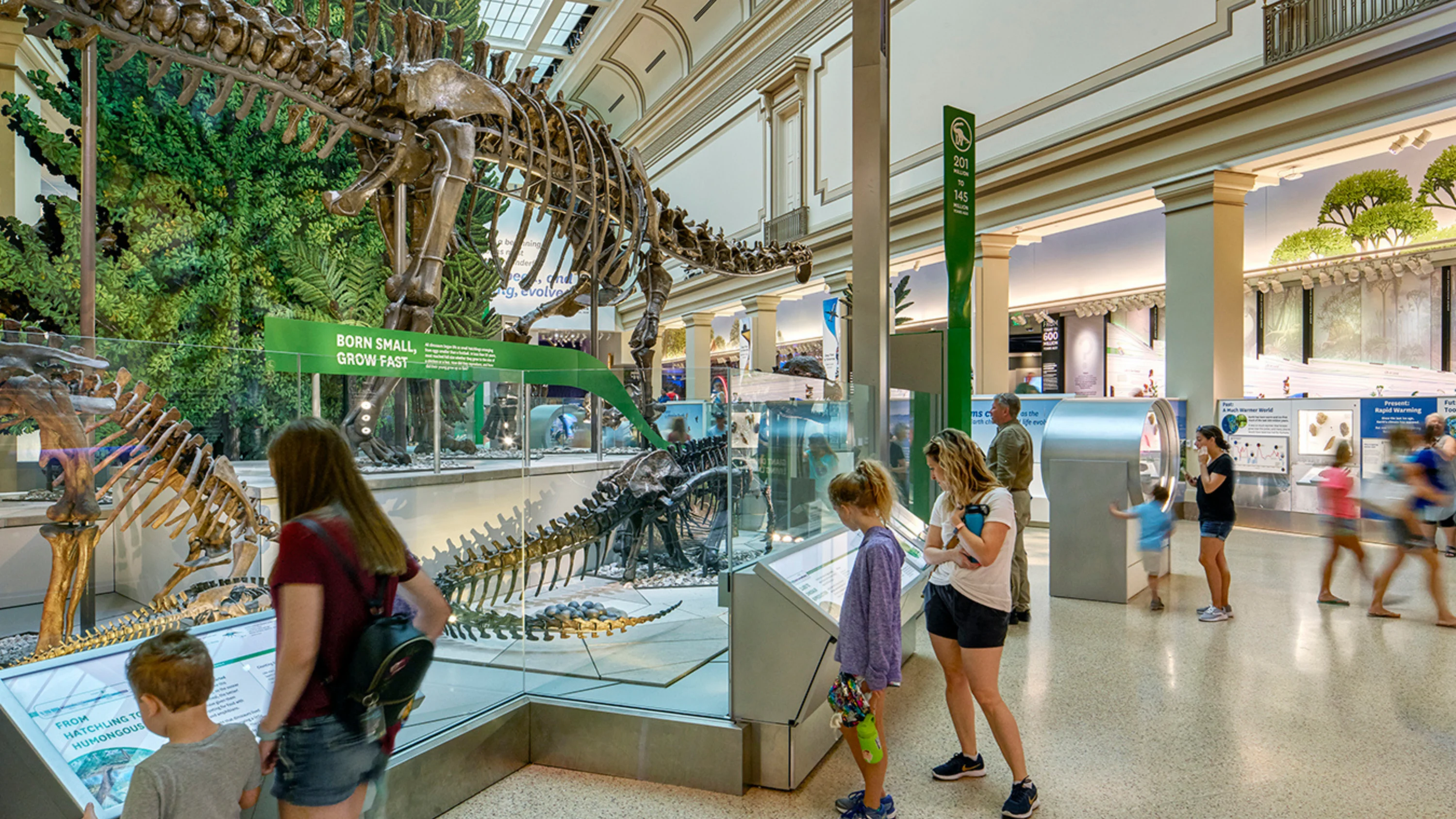
As part of a major museum renovation, the institution reimagined several large-scale, fossilized dinosaur exhibits within a historic gallery. While central to the visitor experience, these specimens, some weighing thousands of pounds, exceeded the capacity of the 100-year-old floor structure, particularly as they were repositioned to support new interpretive narratives and circulation patterns.
EwingCole’s structural engineering team evaluated the floor capacity and underlying structural conditions to define any limitations. Rather than broadly reinforcing the entire floor, the team developed targeted load-transfer strategies that redistributed new exhibit weights into the building’s primary structural framework. Close coordination with architects, exhibit designers, fabricators, and conservators ensured structural solutions aligned with mounting methods, specimen locations, and long-term preservation goals.
By transferring new loads to the existing building support structure and selectively reinforcing structural members, the team safely installed the largest artifacts without compromising the historic fabric or openness of the gallery. The result is a dramatic, immersive space that appears effortless to visitors while meeting rigorous safety, preservation, and performance requirements behind the scenes.

Temporary Needs & Short-Term Loads
Temporary shoring and strengthening can also come into play during limited exhibitions. Exhibit installation and removal, rigging, or crane operations often introduce short-term but significant loads that must be carefully evaluated to ensure safety throughout construction and move-in. Intermittent needs for collection preservation may also result in large, short-term loads on the building structure.
Within one active museum laboratory, a conservation workspace doubles as a public-facing environment where visitors can observe scientists at work. The lab regularly accommodates large, fragile fossil specimens that must be lifted, repositioned, and stabilized for ongoing research and preservation. These intermittent but substantial loads exceeded the existing structure’s original floor capacity, posing a challenge to safe operations in an active museum setting. Rather than over-strengthening the entire floor system, the team designed a dedicated overhead hoist beam system tied directly into the existing structural columns. This integrated solution enabled conservation work to proceed safely while preserving the space’s transparency and educational mission. Researchers gained a reliable, purpose-built system for handling large specimens, and visitors retained uninterrupted views into the conservation process.


Modern Systems: Integrating Performance Without Compromise
Modern museum expectations add another layer of complexity. They are expected to support far more than static displays. New mechanical systems, advanced lighting, multimedia installations, and environmental controls must coexist with historic structures that were never intended to accommodate today’s performance requirements. Structural engineering plays a critical role in making these upgrades possible without compromising building integrity, collections, or the visitor experience.
Our structural engineers work closely with mechanical, electrical, and plumbing teams to identify structurally appropriate pathways for new systems, often threading ductwork, conduits, and vertical shafts through tight and highly constrained conditions. These interventions require careful coordination to avoid weakening historic framing or disrupting existing load paths, while still delivering the infrastructure needed to support modern museum operations.
In addition, vibration performance becomes increasingly important as museums incorporate interactive exhibits, sensitive artifacts, and immersive media environments. Structural analyses help ensure that floors supporting delicate collections or technology-driven displays remain stable, protecting both preservation efforts and the quality of the visitor experience. By addressing these challenges early, supporting systems integration avoids disruption while meeting rigorous performance and preservation standards behind the scenes.
Planning for What Comes Next
Museum renovations succeed when ambition is paired with a clear understanding of existing structures. From supporting heavier collections and modern systems to enabling future flexibility, structural engineering helps institutions evolve while protecting their most valuable assets.
Through an integrated architecture and engineering approach, EwingCole helps museums make informed decisions early, reducing risk and extending the life of historic buildings. The result is resilient, adaptable spaces that support changing exhibitions, advancing technologies, and meaningful visitor experiences for years to come.

Our Expertise
Visit our Expertise page to learn more about EwingCole’s engineering services.