
Listen to what She Said: Shaping the Birthing Experience
Insights
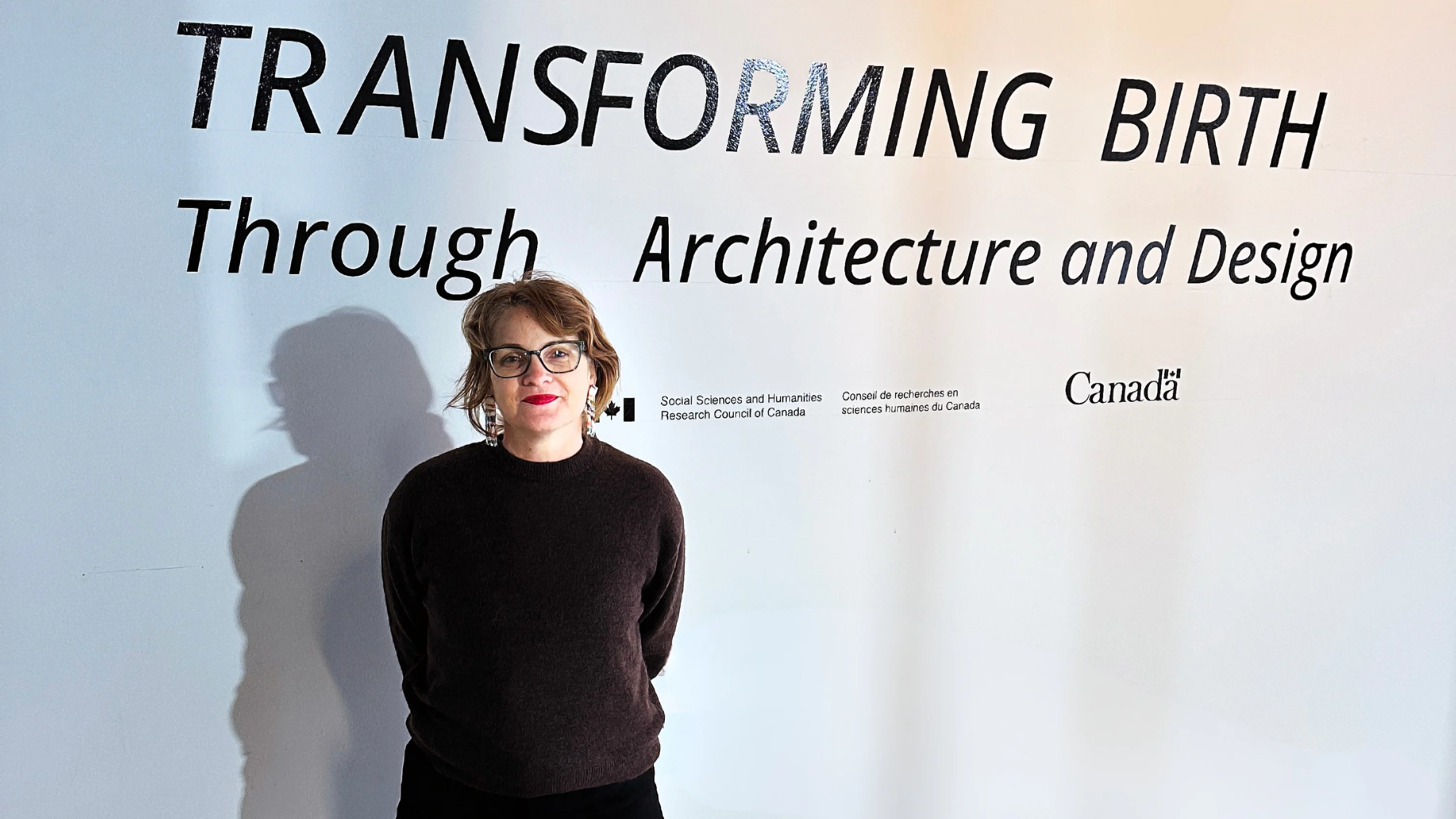
Childbirth marks the beginning of a lifelong relationship with healthcare. It sparks conversations about cardiovascular risks, nutrition, mental health, and family planning. It influences the earliest moments of attachment and establishes patterns that shape future well-being. Yet many people enter this experience in environments that fail to honor their intensity or their long-term impact. Last year’s “Transforming Birthspace” colloquium at OCAD University in Toronto asked designers, clinicians, and researchers to reconsider what it means to design for this pivotal moment. Its central question felt simple: What happens when we treat listening as a design tool?
The colloquium brought together midwives, academics, advocates, and creative practitioners who explore how space, care, and emotion converge during birth. Suzy Genzler, a Design Researcher and Medical Planner at EwingCole, joined the discussion with an immersive audio-visual installation created with filmmaker Joe Tomcho titled, SheSaid. Their collaboration amplified voices often overshadowed in clinical settings and reframed birth through the words of the people who lived it.

SheSaid unfolds as a quiet, intimate encounter. Visitors hear the exact language people used to describe their labors. Some describe empowerment. Others recall fear or abandonment. Many move between these emotions in the same breath. Visual elements deepen the experience, allowing viewers to inhabit the emotional terrain of childbirth and to recognize how the built environment can either heighten or ease those moments. The installation encourages visitors to meet each story with openness and to consider how design might respond to what they hear.
“I was depressed at the time. Do you think interior design of the birth environment can have an effect on that?” asked one featured subject of the project.

Maternal health sits within a broader landscape of women’s health, and birth often marks a young adult’s reentry into regular healthcare after leaving pediatric systems. It becomes an inflection point that reveals previously unknown conditions and establishes long-term care pathways. Recognizing this connection invites designers to view maternal environments as gateways to broader health equity. When spaces encourage trust and agency, they support informed decision-making and healthier outcomes for both birthing people and infants.
“I remember they wheeled in the baby cart, the one with the stainless-steel bowl, and all of the towels and the different instruments. I looked at them wheeling it in, and it just made me nervous, just the presence of it on the other side of the room. I was feeling more nervous as the time went by. And then, all of a sudden, I was 10 centimeters dilated. The nurse came in and said it was go time. I turned to her and I said, ‘I don’t know if I can do this. I can’t do this. I won’t do this.’ I just didn’t want to do it. And she said, ‘You can. We don’t talk like that in here. You can.’ And her words were simple, and somehow they were exactly what I needed to hear. It was over before I knew it,” said another subject of the project.

The First Step is to Listen
Rethinking design for maternal health starts with a set of core principles. Design begins with listening, and early findings from EwingCole’s nationwide Design Research survey reinforce that need. Nearly 40% of hospital birth respondents described their experiences as traumatic. Their stories reveal patterns of stress, loss of control, and emotional isolation that often stem from the built environment as much as from clinical procedures. Trauma-informed design practices can address these realities by minimizing triggers and creating spaces that foster grounding and calm. Equity and dignity also guide this work. Every birthing person deserves an environment that reflects cultural needs, protects autonomy, and upholds comfort. Interdisciplinary collaboration strengthens these efforts and ensures that insights from art, clinical care, and design lead to environments that heal.
Genzler views SheSaid as a bridge between research and empathy.
“The installation brings statistics into human scale and helps viewers see the people behind the data,” she said. “It also demonstrates how design research can shift culture when supported by intentional storytelling.”

Suzy Genzler, CHID, EDAC, Design Researcher & Medical Planner at EwingCole.
Each narrative in the installation adds dimension to EwingCole’s broader research into how physical environments shape emotional experience. Many participants described hospital births as overwhelming, loud, or disorienting. Their words point to an urgent design opportunity: create spaces that invite belonging, presence, and trust.
Designing for birth plays a central role in shaping equitable healthcare. Birth sets the tone for future interactions with medical systems, and the quality of the environment influences how people form those relationships.
“When designers place care, respect, and agency at the core of these spaces, they help break cycles of trauma and build foundations for healthier families and communities,” said Genzler.

EwingCole approaches this work as a sustained commitment to women’s health. SheSaid is merely a reflection of that work and shows how listening operates as both method and message. Listening guides design decisions. Listening affirms humanity. Listening reshapes systems of care by elevating voices that have long gone unheard.
The installation marks a beginning rather than a conclusion. Each shared story widens the conversation and pushes the field toward more compassionate and accountable design. As the dialogue continues, SheSaid stands as a reminder that every healthcare environment begins with a choice: listen to what she said first, then build.